
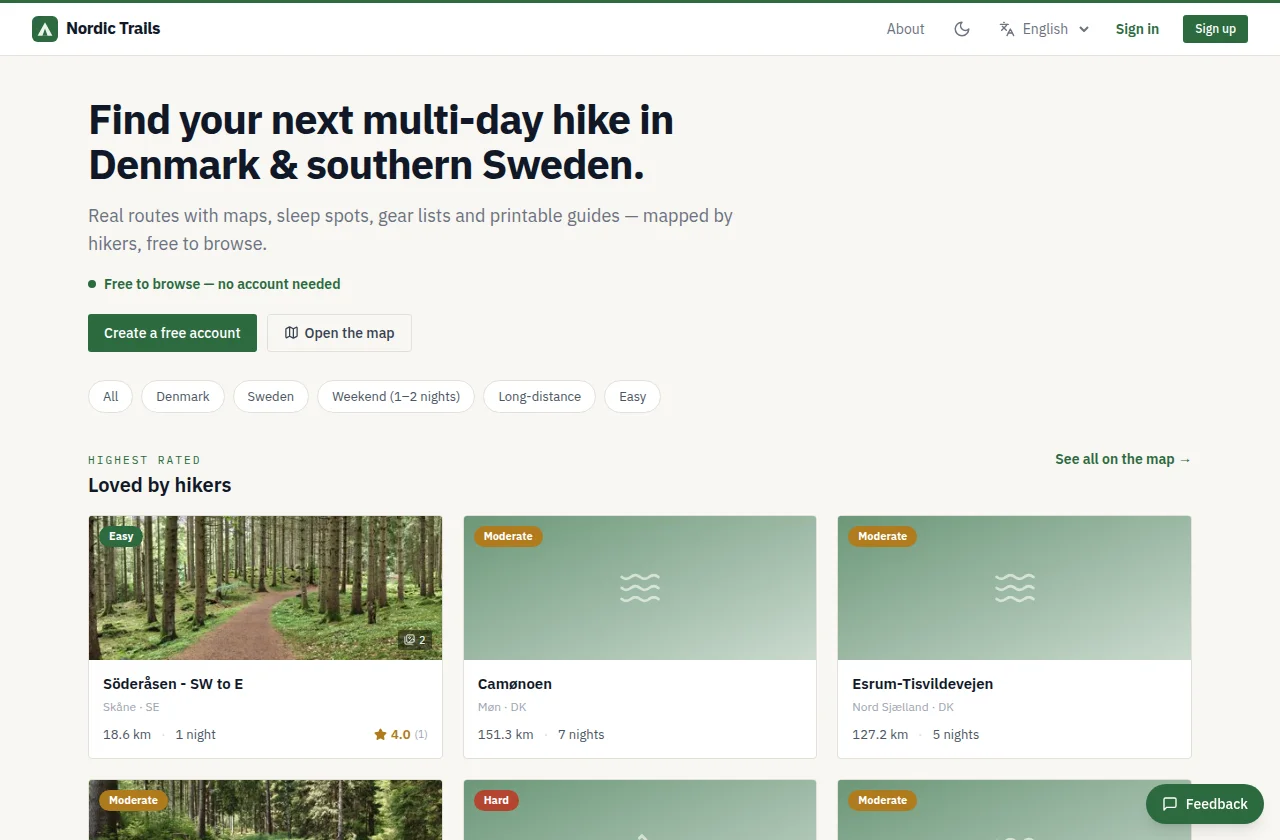
01 / Live product
Nordic Trails
A hiking-planning platform shaped around routes, gear and the practical details of a trip.
Product direction, functionality & design · Claude Code build
The product and my role →Data science, predictive modelling & applied AI · Copenhagen
Exploring patterns, evaluating predictions and building useful data tools. Independent work across quantitative analysis, forecasting and document AI, grounded in enterprise delivery experience.
Selective projects · Scope and timing by agreement
From idea to working tool
Independent products and experiments, with a clear account of my role.
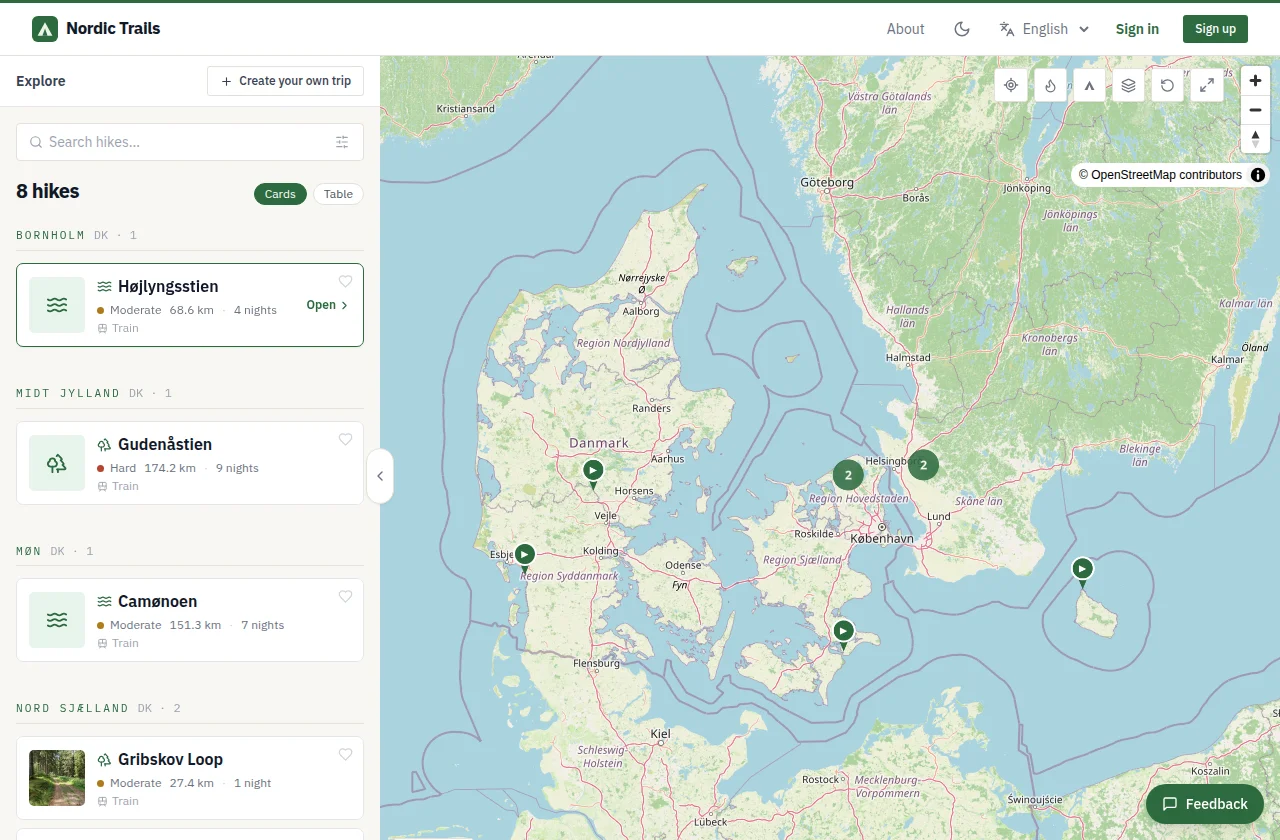
01 / Live product
A hiking-planning platform shaped around routes, gear and the practical details of a trip.
Product direction, functionality & design · Claude Code build
The product and my role →When the benchmark gets stricter
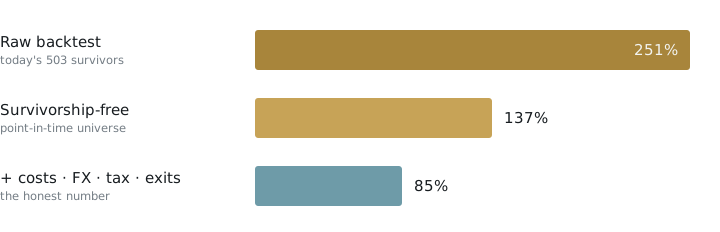 Historical research · 2020 start · methodology in the notes
02 / Research tool
An original Python dashboard expanded with Claude into a research system for portfolio backtesting, benchmark comparisons and paper trading.
Original programming · Claude-assisted benchmark engine
Read the research notes →03 / Local AI experiment
A small local AI assistant for Danish building specifications, exploring document search, chat and Word-template drafting.
Small MVP · Qwen3.5 4B · Jetson Orin Nano
Explore the MVP →04 / Internal tool
A personal tool for planning work, study, projects and available time.
Project manager, customer & product owner · Claude-built
See the workflow →How we start
Start with a question about your data, a prediction to evaluate or a document-heavy task. A small assessment can establish what is feasible and what evidence is still needed.
Start with the decision, prediction or task that matters. Identify the data and what a useful result would look like.
Check data quality, establish a simple baseline and evaluate limitations before adding complexity.
Set a clear scope, named users and acceptance criteria. Agree the handover and support before starting.
Scope, fees, timing and support are agreed in writing before work starts.
Copenhagen, Denmark
The person behind the work
More than eleven years of enterprise delivery at Siemens, ZEISS and TÜV SÜD. Most recently, my work includes a SuccessFactors implementation covering 28,000 employees.
Across those roles, I have enjoyed understanding complex processes, making requirements clearer and turning that understanding into useful changes. I now study machine learning and data science and develop the programming skills to build more of the solution directly.
Start with the task
Tell me about the question, the available data and the decision or task you want to improve.
A few lines about the problem, the data and a useful outcome are enough.
Please leave confidential documents out of the initial enquiry. We can agree a suitable way to share them.